Saturday, November 10, 2012

"Sacred Duty" to support

Remember this? The famous cover to Rage against the machine's album 'Bombtrack.' These were protests by monks against the Vietnam War...

Self-immolation is still happening...

The exiled Tibetan community continue to protest in self-immolating fashion against the Chinese government.

"We have made so many appeals (to stop self-immolations), but they are still doing it," said Sangay, the political successor of the Dalai Lama, as the number of self-immolations by monks, nuns and others swelled to 68 since March 2011.'

Tibet's exiled political leader, Lopsang Sangay, said 'that it is the "sacred duty" of the exiled community to support it.'

The Tibetan leader said the world needs to focus on the cause behind the act, not just the act itself.

http://www.huffingtonpost.com/2012/11/10/exiled-tibetans-support-self-immolation_n_2109795.html?ncid=edlinkusaolp00000003

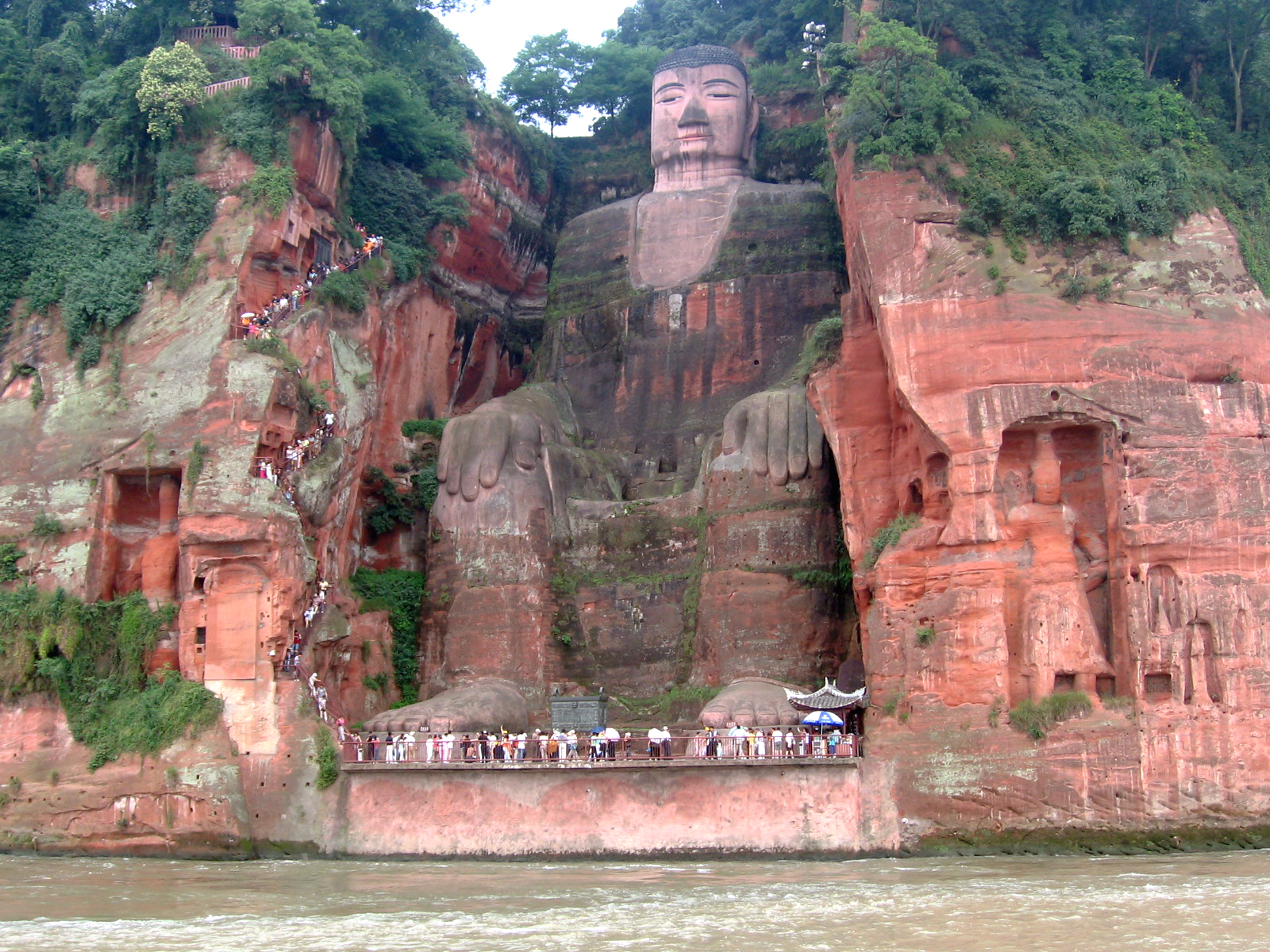
"The mountain is a Buddha and the Buddha is a mountain"


The Leshan Giant Buddha
樂山大佛
'A seated Maitreya Buddha with his hands resting on his knees'

Created during the Tang Dynasty (618 - 907 AD)
Located in the Mount Emei area 

"Construction was started in 713, led by a Chinese monk named Haitong. He hoped that the Buddha would calm the turbulent waters that plagued the shipping vessels traveling down the river. When funding for the project was threatened, he is said to have gouged out his own eyes to show his piety and sincerity. After his death, however, the construction was stuck due to insufficient funding. About 70 years later, a jiedushi decided to sponsor the project and the construction was completed by Haitong's disciples in 803."
http://en.wikipedia.org/wiki/Leshan_Giant_Buddha 


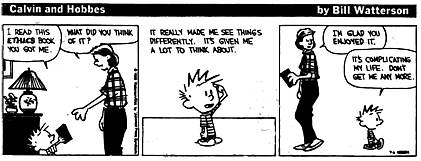
Calvin and Hobbes on innateness


Wednesday, November 7, 2012

*Art and Religion


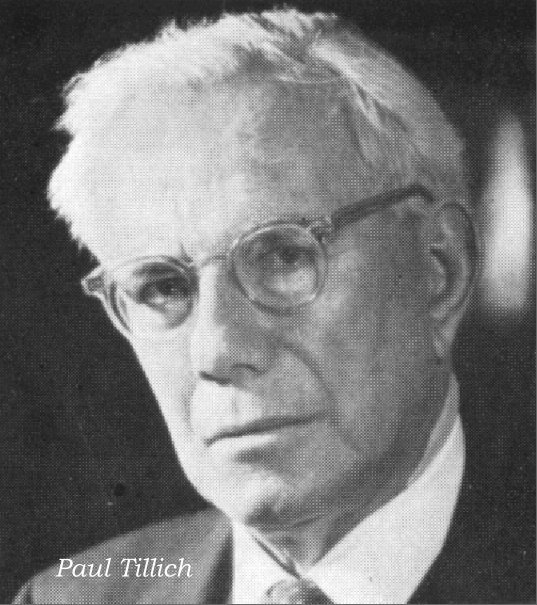
Paul Tillich is perhaps the greatest U.S. theologian of the 20th century. However, in the UK, a book on modern theology fails to mention or even list him in the index.

I went to a seminar today entitled 'The Religious Meaning of Culture,' which plays off the title of Tillich's book: The Theology of Culture. The subject was about reviving a "Neo-Tillichian systematic theology," which of course must apply itself to the contemporary landscape of culture.

Now, although I have read two of Tillich's work, I do not know enough about his systematic theology nor do I know him well enough to speak, with thoroughness, of the seminar today.

What I would like to do here is pick up on, what was really, the end point of the paper. Today we are living in a capitalist society and there is no room for change. Capitalism is here to stay, or so the speaker says. We cannot envision an alternative. We are strained by this form of economy and any vision for a "utopia" is actually blocked off because of the possibilities we have today. The speaker calls it a culture without a future. This sounds much like Francis Fukuyama's The End of History. Because of these constraints the 'Ultimate Concern,' which is what is identified with religion becomes unimaginable and impossible. I'm not sure if I summarized this part of his argument correctly but let's posit it for the sake of fun and this post.


Given this "culture without a future," which I myself don't necessarily agree with, I would like to make the parallel of religion's ultimate concern and the art. Two artists came to mind while this talk was being given, Duchamp and Basquiat. Artists who in a way shook the art world. Duchamp brought in a urinal, put his name on it, and placed it in a gallery and challenged the very concept of what art is. This is perhaps a definitive moment of begging the question. It is avant-garde to the contemporary landscape of the art scene. This action alone by Duchamp has propelled the discussion of art, art theory, and art criticism. My parallel here with the "culture without a future" and the constraints imposed by capitalist possibilities, is the occupy movement. I think today we are beginning to question the economic system more and more. Occupy Wall Street was not a temporary thing. It is still moving forward and still alive. My sense is that the disgust and disdain for the economic system today is still there. In this sense we question the economy. Much like Duchamp's urinal questioned art and propelled the discussion.

My second artist is Basquiat. Picked up by Andy Warhol, he is perhaps one of the representative artists who made the transition from street art to canvas. He represented the marginalized, the unexpected, the one's outside of the box of culture but still permeated with their own sense of style and culture. They were the one's outside of the art world. The marginalized. The analogy is the art world to Tillich's 'Ultimate Concern', the 'Unimaginable.' If we cannot find anything new or any fresh possibilities, what does shake the box is the work from what has been marginalized. Another good example is hip hop, which generated new styles of music, art, and dance.

So I would beg the question of what the 'Ultimate Concern' for the present culture would be. Does an 'immediate concern' collapse with an 'ultimate concern' and is in fact that concern? If we are strained by the broad range of possibilities of capitalism such that it inhibits the imagination to the extent that we can no longer envision what a utopia would be, does not the act of questioning and threatening 'art' and the marginalized shake-up of the box not give possibilities and imagination to the unimaginable? Is it not time to reconsider what the 'Ultimate Concern' is and perhaps look to the marginalized thinkers for what may be the realm of the 'unimaginable'?

The Drinking Party

A modern 1965 version of Plato's Symposium:


Religion and the 2012 Election

Dr. Robert P. Jones from the Public Religion Research Institute talks with Fox5 News about religion and this year's election:


And at the BBC:
"Roy Jenkins is joined from Washington DC by Joseph Loconte, Associate Professor of History, The King’s College, New York, and by Jim Wallis, CEO of the Sojourners Community, activist, and theologian. And on this side of the Atlantic, we have Stephen Bates, former Religion Correspondent for The Guardian newspaper, who’s written extensively on religion and politics in America and by Professor Douglas Davies, anthropologist, theologian and expert in the Mormon faith [from Durham University]" BBC Radio Wales 'All Things Considered' podcast:
http://www.bbc.co.uk/programmes/b01nqcj6


Calvin and Hobbes on Math as Religion


Monday, November 5, 2012

"With the concept of 'ritual,' one is reminded of what Wittgenstein says about thought: it is like silver paper, and once crumpled it cannot ever be quite smoothed out again"
-Rodney Needham, 'Remarks on Wittgenstein and Ritual'


Calvin and Hobbes on Ethics


The Psychology of Everything?!

Paul Bloom....I have some contentions with how he interprets some of his data and didn't quite agree with some of his conclusions from his book, Descartes' baby, but it's worth a watch. Disregarding the pretentious title of the video, Bloom talks about some of the psychology data on 'compassion,' 'racism,' and 'sex.'
*Do note some of the tentativeness of how some of the data is interpreted.   


Sunday, November 4, 2012

"Heathen"


So "uncivilized"... 


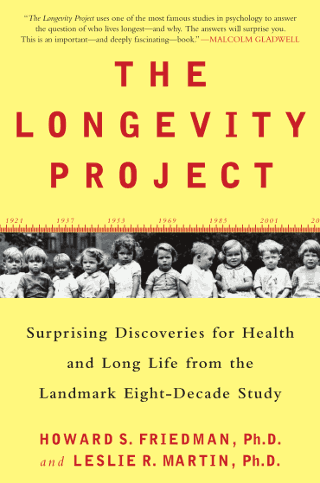
Longevity Project


"In 1921, before most of us were born, a remarkable study began tracking the loves and lives of 1500 Americans from childhood to death. The study continues even today, with research teams led by Howard Friedman still keeping tabs on the remaining few who are still alive and analyzing massive amounts of data to establish what it is precisely about these 1500 individuals that led some to stay well and others to fall ill or die before their time. Incredibly, no one until now has chronicled and interpreted the findings from this monumental almost century-long project for the general public. Is longevity associated with being married, daily jogs, living with pets, or faith in God? At last, with lucid prose and rigorous yet crystal clear analysis, Professor Friedman and Professor Martin have succeeded beautifully."
— Sonja Lyubomirsky, author of The How of Happiness: A Scientific Approach to Getting the Life You Want


Interesting... 
 

Cultural variance and autism

Nature recently published an article on the need for the study of autism "must account for a variety of behavioral norms in different societies."

The standard diagnostic of autism has been sharply shaped by a western standard of normativity. They have a particular view of what autism is, what the indicators are, and how to treat it. However, the cultural variances are challenging these assumptions and the lines are no longer clear cut.

http://www.nature.com/nature/journal/v491/n7422_supp/full/491S18a.html


"The great majority of mankind are satisfied with appearances, as though they were realities, and are often more influenced by the things that seem than by those that are."
-Machiavelli


"Entre nous, et l'enfer ou le ciel, il n'y a que la vie entre deux, qui est la chose du monde la plus fragile"
Between us, and heaven or hell, there is only life between the two, which is the most fragile thing in the world.

"Le silence est la grande presecution; jamais les saints ne se sont tus"
Silence is the greatest prosecution; the saints never went silent

-Blaise Pascal, Pensees