A couple days ago, I went to a seminar on 'The Political Participation of Muslims in Britain and France.' The speaker provided a great historical context post WWII. With the waves of immigration into the UK and France, many immigrants from South East Asia, Africa, and other regions of the world with a predominant Muslim background.
During the 50's and 60's the working conditions for immigrants were deplorable. Long hours, stuffed in worker hostels, minimum wage, and gradually increasing rent with no increase in pay. This was a time of exploitation and undermining the immigrant population as sub-human workers. There is much to be said in analogy to the U.S. of African-Americans post slavery, the waves of immigrant workers from Europe, and Asia. From my own background I know that many of the first Koreans that migrated to the U.S. were promised better working conditions, they were sold the "American Dream" only to come to America as sugar cane workers who worked 18 hour days, minimum wage, and stuffed into rooms with several other workers. Indentured servitude was the way. Come work for us while you pay off your debt in the costs we used to bring you here. The Korean women were brought over as mail-order brides, objects of property, the new house slave. In the UK and France, these were primarily the south east Asians of India and Pakistan.
Eventually, protests emerged. They banned together for better working conditions and economic injustice. They were racially profiled and derogatory names were called. Interestingly enough, nothing was mentioned about their religion. They themselves did not consider it as a religious issue either. In fact, many did not agree with much of the practices of their religious background. Just like many do not agree with some of the practices and values of their Christian background, many of the immigrant workers were similar. They banned together against economic injustice. Later as the years went on, further protests were held regarding race and the prejudice that continued to be aimed towards them. They considered themselves "politically black" as they identified with the Black panther movement in the U.S.
It is not until recently that religion has come to the forefront. Where religion was considered a non-issue before it has been singled out. What is argued is that since religion was given the spotlight as a point of emphasis in difference, many have become more and more religious and "Islamic." Protests are held now in the name of religion. Much of this can be considered as obvious social reasons. When initially male workers came to these countries and began working, it was not much concern other than the color of their skin. As their families came, wives, and children, the apparent differences in dress and style become more apparent. This furthered the curiosity about the immigrants and religious differences began to creep up.
However, another side of the focus on religious differences can also be considered as a by-product of over-sensitizing language and a product of power. With respect to the first, race and color has become an increasingly sensitive issue and practically taboo to mention race. There is an underlying subconscious fear of being labeled racist or imperialistic, colonialist, or whatever the label for oppressor might be. And because of this sensitization and the tremendous back-draw politicians would receive if they called out a group by color, the dynamics of power has adapted to exclude the issues of race. They have masked the term into other categories and other labels. One way of focusing and creating a common enemy, as a method of mobilizing consent and power, has been the focus on religion. This was not done with the Christians when they bombed abortion clinics, committed hate crimes against homosexuals, but radically quick to create an association of fear with the religion of Islam. 9-11 was one of those mobilizing forces. And although the collection of evidence and the ensuing information that has come to light after the event where further suspicion has been placed, the effect was already accomplished. By utilizing the character of Osama bin-Laden, an out-group enemy was created. The tremendous rage and anger from the collapse of the twin towers in America is an example of creating an in-group dynamic, a bandwagon, a team USA.
Religion is now at the forefront rather than color or worker's rights. This is not to say that the issues of race and the working class has disappeared. But rather they have subsided under the hype of terror and the group of people associated with that label. What the past does indicate is that with the sensitization of language, and as we begin to see a sensitization with religion, it will be curious to see what the new labels for creating an out-group dynamic will be as power-mongering and manipulation of the masses for it continues to perpetuate its culture. One other interesting thing is the return of worker's rights and their protests. Their issues have never truly died down. We see the anti-globalization movement, which emphasized the economic hegemony that has come to be dominating the world markets. Getting rid of the local corner store and the rise of McDonald's and Starbucks. In America we see the occupy movement that has gained ground in protesting against income inequality and the greed of Wall Street. How CEO's get paid salaries that most could never dream of making in their life time. How we have fallen into a debt culture and we are bound by a system of forever paying back our debts. This raises the question of cyclical patterns of protest and emphasis; issues with the nature of governance, economy, social justice, and the creation of out-groups to mobilize a discourse of power.
What this does tell us, at the very least, is the impact that language has on creating social groups and even in effect pushing stances further from a common public sphere. It could be argued that the recent rise in Muslims and a rise in its conservative form is a product of linguistic sensitivity. A hypothesis that language and evolving discourse shapes and molds the way society functions.
Sunday, February 26, 2012

"It is only when the market model of reciprocity is abandoned for an acceptance of individuals as social 'gifts' to each other that an appropriate grammar of discourse for both altruism and welfare may emerge. Embodiment, grounded in moral-somatic dynamics, is the 'medium' of such gifts and symbolic exchange their natural expression" -Douglas Davies
Sunday, February 19, 2012
Friday, February 17, 2012
"I would go with Pierre Hadot and say that the love of wisdom is a way of life; that is to say, it’s a set of practices that have to do with mustering the courage to think critically about ourselves, society, and the world; mustering the courage to empathize; the courage, I would say, to love; the courage to have compassion with others, especially the widow and the orphan, the fatherless and the motherless, poor and working peoples, gays and lesbians, and so forth—and the courage to hope. So, it is a way of life, a set of practices, no doubt, but, at the same time, I call it a kind of focus on the funk. And what I mean by that is—you remember that wonderful letter by one of my great heroes, Samuel Beckett, where he says “Heidegger may talk about being and Sartre may talk about existence, but I talk about the mess. And my fundamental aim as an artist is to try to find a form that accommodates the mess?” Well, Beckett’s mess is my funk. And by funk, what I mean is, wrestling with the wounds, the scars, the bruises, as well as the creative responses to wounds, scars, and bruises—some of them inflicted because of structures and institutions, some of them being tied to our existential condition, in terms of losses of loved ones, in terms of diseases, in terms of betrayals of friends, and so forth; all of these are wounds and scars and bruises. And it’s at that very concrete level that my concept of philosophy operates. That’s one reason why I spend as much time with poets and musicians as I do with philosophers in my love of wisdom, in my particular conception of philosophy. So, it’s Chekhov, Beckett, and Kafka as much as Beethoven, Stephen Sondheim, and Curtis Mayfield. These are persons who in their conceptions of their vocations are trying to make sense of the world at this very, very—what would be the right word?—ground-level engagement with the mess, Beckett’s term, or the funk, my own term." - Cornel West
Thursday, February 16, 2012
"There should be no question of what Christian theology has to do in this situation. It should decide for truth against safety, even if the safety is consecrated and supported by the churches. Certainly there is a Christian conformism, from the beginning of the Church on, and there is a Christian collectivism - or at least semi-collectivism, in several periods of Church history. But this should not induce Christian theologians to identify Christian courage with the courage to be as a part. They should realize that the courage to be as oneself is the necessary corrective to the courage to be as a part - even if they rightly assume that neither of these forms of the courage to be gives the final solution."
-Paul Tillich 'Courage to be'
Tillich's statement about Christian theology is applicable to all religious traditions.

-Paul Tillich 'Courage to be'
Tillich's statement about Christian theology is applicable to all religious traditions.

*We need to talk about Kevin
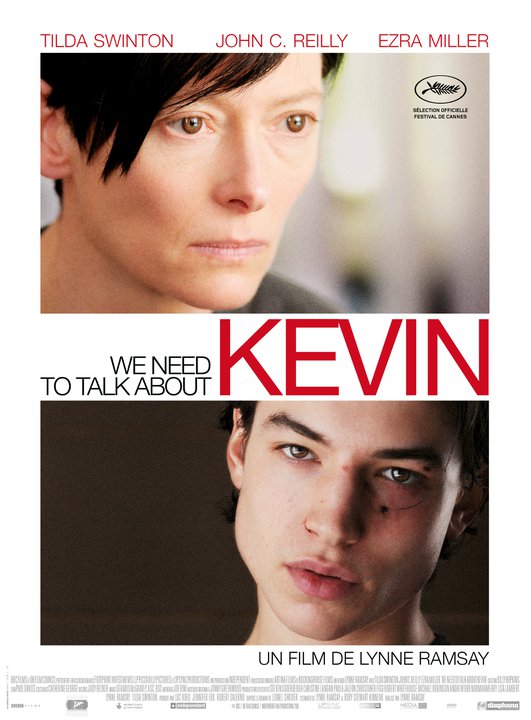
'We Need to Talk About Kevin' was an interesting movie about parent-child dynamics and its effects on personal development and adolescence. Particularly, it was about mother-son relationships. The movie deliberately stays away from any depictions of parenting styles, but represented the detached nature of this mother with her son since the time he is born. She sits in the bed staring blankly, while the father comforts the baby. This contrasts with the typical scene of the mother holding the child after birth. This theme of detachment is furthered by the scenes of early child-rearing where she is exhausted because her son cries all the time and she spaces it out while she is standing next to noisy construction work. As the child grows older and the mother attempts to play with the boy, the child does not reciprocate and resists the attempts of his mother trying to play with him or build a bond. She is, or at least seems, clueless as to why the child is of a disgruntled disposition. This fuels the dynamic and tension between the mother and son.
Throughout the film, I kept returning to the themes of attachment styles that was prevalent during the late 70's with Mary Ainsworth. I also kept going to the theme of attention-seeking behavior and how, for the child, negative attention is better than no attention at all. What underlies all of this is the way our interactions with our mothers influence our emotions and how we deal with them.
In 1978, Mary Ainsworth in her work with Bowlby conducted a few experiments or scenarios by which she could test her hypothesis of distressed babies and parenting styles, which culminated in her categorization of "attachment styles." She devised a sequence of scenarios, which she called the "Strange Situation" and focused on the reactions of the child. This was a way of applying the studies that Harlow did with capuchin monkeys and their tendency to cling to artificial surrogate mothers with fur, rather than the one without fur.
Here I will quote from Haidt's book ('The Happiness Hypothesis'): "in the first scene, the mother and her child enter a comfortable room, full of toys. Most children in the experiment soon crawl or toddle off to explore. In scene two, a friendly woman enters, talks with the mother for a few minutes, and then joins the child in play. In scene three, the mother gets up and leaves the child alone for a few minutes with the stranger. In scene four, she returns and the stranger leaves. In scene five, the mother leaves again, and the child is all alone in the room. In scene six, the stranger returns; and in scene seven, the mother returns for good. The play is designed to ratchet up the child's stress level in order to see how the child's attachment system manages the scene changes. Ainsworth found three common patterns of managing." Secure, Avoidant, and Resistant.
Secure attachment children would "reduce or stop their play when their mothers leave, and then show anxiety, which the stranger cannot fully relieve. In the two scenes where mom returns, these children show delight, often moving toward her or touching her to reestablish contact with their secure base; but then they quickly settle down and return to play."
Avoidant attachment children did not seem to care very much whether the mother came or went, although they did show some signs of distress. Ainsworth drew the conclusion that these children suppressed their distress by "trying to manage it on their own instead of relying upon their mother's for comfort.
Resistant attachment children were "anxious and clingy throughout the study. They become extremely upset when separated from mom, they sometimes resist her efforts to comfort them when she returns, and they never fully settle down to play in the unfamiliar room."
Ainsworth went on to observe mothers at home and the way they dealt with their children there. She observed that mothers who were warm and highly responsive were most likely to have secure attachment children. "These children had learned that they could count on their mothers, and were therefore the most bold and confident. Mothers who were aloof and unresponsive were more likely to have avoidant children, who had learned not to expect much help and comfort from mom. Mothers whose responses were erratic and unpredictable were more likely to have resistant children, who had learned that their efforts to elicit comfort sometimes paid off, but sometimes not."
The conclusions about mothers that Ainsworth draws are somewhat problematic as subsequent studies about parenting styles and attachment styles in children from other countries vary. For example, I believe that it was in Germany that they found most children had an "avoidant" attachment style. And I'm not sure whether the parenting style and attachment style translates competely. What it does indicate is that there is a positive correlation between parenting style and the child's method of dealing with stress. In later studies, psychologists found that these attachment styles related to relationship styles. Consider the following:
1. "I find it relatively easy to get close to others and am comfortable depending on them and having them depend on me. I don't often worry about being abandoned or about someone getting too close to me."
2. "I am somewhat uncomfortable being close to others; I find it difficult to trust them completely, difficult to allow myself to depend on them. I am nervous when anyone gets too close, and often love partners want me to be more intimate than I feel comfortable being."
3. "I find that others are reluctant to get as close as I would like. I often worry that my partner doesn't really love me or won't want to stay with me. I want to merge completely with another person, and this desire sometimes scares people away."
These are respectively in the order of Secure, Avoidant, and Resistant. Note that these are not necessarily the case but generalizations and correlations. There are always exceptions, outliers, and other factors involved. And I'm not sure about the sample or the methodology so there are some things to consider before making a direct causal relation between parenting style, attachment, and relationship styles. But this detracts from the initial topic: mother-son relationships and their outcomes.
It is obvious throughout the movie that Kevin is an angry child and wants his mother's attention. His "style' can be classified as "avoidant." And he exemplifies the extreme of this category fueled and motivated by his mother's inability to pick up on any cues or really learn her child's language and "body language." Kevin goes on a rampage - even going so far as to killing his father and his sister. He goes into the pits of nihilism and continues deeper without a point of rebounding where existentialists talk about the empowerment of self-creation, the "will to power" or the popular philosophy of you are free to create whoever you want to be, or you are your own self-creation. The self-affirming process of individual authenticity and meaning-making.
Instead Kevin does not get out of nihilism's grasp: "the point is that there is no point." Many would consider existentialism a philosophy of despair but Sartre really spoke of it as a philosophy of humanism, hope, and optimism. That you are free to create without the boundaries, constraints, and restrictions of prior structures.
Now this is somewhat questionable as much more genetic research and identical twin studies begin to come out with fascinating case studies and anecdotal evidence as well as trends, correlations, genetic triggers, and studies of this nature. Genetics has re-vitalized the nature-nurture debate and the extent of nature via nurture.
Nonetheless, it would seem obvious to say that parenting and how we parent is a critical and important dimension of cultivating our children's emotions and habits. Being a parent is no joke and it is definitely not filled with simply happy moments. There is shit, piss, diapers, crying, waking up at all kinds of ungodly hours, back-talk, disrespect, pushing boundaries, hitting, crying, more shit, more piss and dealing with all sorts of unexpected stresses. The joys are there no doubt. But we must be conscientious and attentive to the way we raise our children. Our relations with our children are important and so are our relations to our mothers and fathers. Having a child is, truly, like getting a "tattoo on your face." You can't take it back.
Tuesday, February 14, 2012
*The Help

After having watched this movie, which I recommend to all, I am struck with the socialization and the construction of disgust in its use as a method of discrimination.
We are well aware of our conceptions, and for some obsession, of cleanliness, purity, and sanitation. The opposing state of these things is what we find disgusting, dirty, and thereby deem them morally wrong. Society has progressed in some ways with respect to its sensitivity of civil rights and equality, justice, liberty, and the pursuit of happiness. However, as Malcolm-X once put it: you can't stab a man in the back 10 inches pull it out 4 and call it progress. What is needed is a critical look at our prejudices and how we may derive insights from the past.
One of the pervading memes throughout this movie was the sanitation act of separate but equal toilets. The initiative by white upper middle-class women, who wanted to install separate toilets outside of their homes for their African-American maids to use. The motivation behind this initiative was disgust and a germ-a-phobia of sitting on the same toilet as colored folk. There are two forms of morality involved here. One that involves the dynamics of respect/authority, which is also involved with another dimension of in-group/out-group bias and notions of loyalty. The other is the notion of disgust and purity. With respect to the former, I think we are all quite familiar with in-group clicks and feelings of exclusion. This extends to sports, tribes, societies, religions, and forms of racism such as the KKK and the Black Panthers. All contain an element of hierarchical authority, levels of respect with those hierarchical structures and degrees of in-group/out-group intensity. During the time of this movie, the policy of separate but equal was popular. Prejudice and discrimination was rampant.
The second form of morality is an extension of the first one I just mentioned. The dimensions of disgust and purity. Most notably, one of the women was very conscientious about germs and did not like the idea of sharing a toilet with her black maid. Therefore, she drafted an initiative to have toilets built outside people's houses, separate toilets, for the black maids to use. The motivation behind this is disgust and notions of what is pure and sanitary. She didn't mind sharing a toilet with her fellow white people. But she cringed at the idea of sharing one with a black lady.
What really came to mind in terms of this dynamic of disgust and purity, is that how much what is disgusting has changed over time and differ from culture to culture. Pork was disgusting, and many consider as such still. Killing people in an arena was entertainment. Genocide and the systematic execution of persons was ok during certain periods of time for a certain people. North Korea and other countries in Africa, still do it. Wearing cloth of two different material was considered unpure. In other countries, eating grasshoppers is ok. In others it's disgusting. The same can be said of frogs, horses, cats, rats, and dogs. In some cultures they are considered not disgusting and in others. Any physical excretion is deemed disgusting (urine, feces, semen, menstrual blood). In other countries boys are supposed to drink "men's milk" as part of an initiation process into manhood. Other countries would deem these as disgusting. Cannibalism is a sacred ritual in other places it is not. Incest is also another category of invoking disgust. During the medieval times and other ancient civilizations, incest was encouraged within families to maintain the royal blood line.
The notions of disgust and purity have changed over time and have differed across cultures. These are based on sociological reasons and norms of a society and their own emotional reactions to things or how they have decided to manage and interpret their emotional reactions to things.It is dangerous to attach notions of disgust, sanctity, and purity as standards for prejudice and discrimination. How we reason about things we find disgusting and the reasons we conjure to create certain forms of behavioral normacy bleeds into the terrain of how we should consider our emotions in reaction to other cultures and other persons.
The justification of right and wrong, must be considered carefully. We must establish principles that support the virtues and values that we can, as a global community, uphold across the world. The Human Rights charter is a start. The second is how do we maintain and uphold the integrity of these Human Rights values across nations without the corruption of greed that undermine the values we seek for all of humanity and the dignity of life.
Sunday, February 12, 2012
From the 'Happiness Hypothesis'
by Jonathan Haidt
"Pennbaker discovered that it's not about steam; it's about sense making. The people in his studies who used their writing time to vent got no benefit. The people who showed deep insight into the causes and consequences of the event on their first day of writing got no benefit either: They had already made sense of things. It was the ones whose health improved over the next year. In later studies, Pennbaker asked people to dance or sing to express their emotions, but these emotionally expressive activities gave no health benefit. You have to use words, and the words have to help you create a meaningful story. If you can write such a story you can reap the benefits of reappraisal (one of two healthy coping styles) even years after the event. You can close a chapter of your life that was still open, still affecting your thoughts and preventing you from moving on with the larger narrative."
p. 148
by Jonathan Haidt
"Pennbaker discovered that it's not about steam; it's about sense making. The people in his studies who used their writing time to vent got no benefit. The people who showed deep insight into the causes and consequences of the event on their first day of writing got no benefit either: They had already made sense of things. It was the ones whose health improved over the next year. In later studies, Pennbaker asked people to dance or sing to express their emotions, but these emotionally expressive activities gave no health benefit. You have to use words, and the words have to help you create a meaningful story. If you can write such a story you can reap the benefits of reappraisal (one of two healthy coping styles) even years after the event. You can close a chapter of your life that was still open, still affecting your thoughts and preventing you from moving on with the larger narrative."
p. 148
Wednesday, February 8, 2012
*On De-ethnisization, new religion movements, and Bruce Lee
Having just returned from a lecture on De-ethnicization in Neo-Hindu movements and the Kabbalah center, I wanted to collect my thoughts on the lecture.
To recap, there have been globalizing efforts by some neo-Hindu groups, centered around a Guru promoting wisdom and regional practices of yoga. In comparison, the professor brought into the fore the Kabbalah center that promotes the Jewish Kabbalah and its ancient wisdoms. Both groups have focused on the universal application for their practice and thought tradition. In other words, it wasn't something specific to Jewish or Hindu persons but to all. Both groups de-emphasized their localized contexts and the significance their stemming traditions have with "ethnicity." The term ethnicity carries its own set of problems with identity. Especially in a taxonomic sense of categorizing persons into certain heritages and identities. Hindu can mean several things and the term Jewish becomes problematic when we start thinking about Jewish persons of different regions, europe, the middle east, africa, etc. But this is a whole different set of issues concerning ethnicity.
The two movements that the professor presented pertained primarily about the applicability of these movements and their allure, their "exoticism" or mysticism, that they present to the "counter-culture" group of youth who rebel against their prior institutions but are still on "soul-searching" missions. Searching for mystical and other spiritual forms of truth and "finding themselves." The Kabbala center, which presents a sense of Jewish mysticism, and the Neo-Hindu movements have sought to do these things. The motivations for this may be to preserve a tradition and disseminate it globally in an act of preservation. At the same time this could also be a reaction to the global marketplace where religious traditions and new ones are competing for membership and the reproduction of the truths that they have to offer. Here both groups sought out non-Hindu, non-Jewish members and made their traditions accessible to them. They promoted a policy of inclusivity. The problems of this "de-ethnicization" the professor said was the inter-subjective dynamic that evolved with the notions of privilege, order, and orthodoxy. In other words, there were certain privileges that the Hindu practitioners or the Jewish members observed that weren't necessarily accessible to the non-ethnic members. This inherently creates tension while the policy is that everyone can have access to these ancient wisdoms, truths, and practices. And at the same time, we have the problems of identity and the privileges of identifying with a particular tradition and being part of that ethnicity.
Some of the things that are also important, is that despite their proclamations of universals and they state that they are not bringing anything new but that the spirituality is there. They are not bringing anything new to these new people looking for some sense of spiritual truth. Nonetheless, the religion cannot be completely detached from the culture. In other words, the discourse and language by which these practices and truths are taught still stem from the language of their originating traditions. The practices are developed from those traditions as well. And the legitimacy to these truths that they are providing are granted validity and legitimacy from a long-stemming tradition. Masters of masters, gurus of gurus, and a long succession of such. The Kabbalah center proclaims an ancient text of wisdom and truth for all of humanity, something that stems from the Judaic tradition. This is not necessarily a criticism of the intentions of these groups but rather a socio-historical point of religion and culture, and their inability to detach from one or the other.
While the professor was going on, I couldn't help but draw analogy to Bruce Lee and his case of bringing kung-fu to the United States. The martial art was considered exclusive to the Chinese and abominable to let out the secrets of the masters to those who were not. This is parallel to the tensions faced by Berg of the Kabbalah center and some of the other Neo-Hindu movements. Nevertheless, Bruce Lee taught kung-fu to his fellow university students. This was considered heresy. In a way, he was providing a new religion, or a new "way of life" to these students. Ultimately the tensions and limitations of kung fu forced Bruce to create his own: Jeet Kun Do. Perhaps the creation of this new form was in part motivated by the strong installments of orthodoxy, identity, and privilege. And I wonder if this is the direction for these neo-hindu movements and Jewish movements seeking to provide an accessibility to others. That the creation or derivation in its own form is necessary to avoid some of these inter-subjective dynamics and tensions that stem from identity, privilege, and orthodoxy.
To recap, there have been globalizing efforts by some neo-Hindu groups, centered around a Guru promoting wisdom and regional practices of yoga. In comparison, the professor brought into the fore the Kabbalah center that promotes the Jewish Kabbalah and its ancient wisdoms. Both groups have focused on the universal application for their practice and thought tradition. In other words, it wasn't something specific to Jewish or Hindu persons but to all. Both groups de-emphasized their localized contexts and the significance their stemming traditions have with "ethnicity." The term ethnicity carries its own set of problems with identity. Especially in a taxonomic sense of categorizing persons into certain heritages and identities. Hindu can mean several things and the term Jewish becomes problematic when we start thinking about Jewish persons of different regions, europe, the middle east, africa, etc. But this is a whole different set of issues concerning ethnicity.
The two movements that the professor presented pertained primarily about the applicability of these movements and their allure, their "exoticism" or mysticism, that they present to the "counter-culture" group of youth who rebel against their prior institutions but are still on "soul-searching" missions. Searching for mystical and other spiritual forms of truth and "finding themselves." The Kabbala center, which presents a sense of Jewish mysticism, and the Neo-Hindu movements have sought to do these things. The motivations for this may be to preserve a tradition and disseminate it globally in an act of preservation. At the same time this could also be a reaction to the global marketplace where religious traditions and new ones are competing for membership and the reproduction of the truths that they have to offer. Here both groups sought out non-Hindu, non-Jewish members and made their traditions accessible to them. They promoted a policy of inclusivity. The problems of this "de-ethnicization" the professor said was the inter-subjective dynamic that evolved with the notions of privilege, order, and orthodoxy. In other words, there were certain privileges that the Hindu practitioners or the Jewish members observed that weren't necessarily accessible to the non-ethnic members. This inherently creates tension while the policy is that everyone can have access to these ancient wisdoms, truths, and practices. And at the same time, we have the problems of identity and the privileges of identifying with a particular tradition and being part of that ethnicity.
Some of the things that are also important, is that despite their proclamations of universals and they state that they are not bringing anything new but that the spirituality is there. They are not bringing anything new to these new people looking for some sense of spiritual truth. Nonetheless, the religion cannot be completely detached from the culture. In other words, the discourse and language by which these practices and truths are taught still stem from the language of their originating traditions. The practices are developed from those traditions as well. And the legitimacy to these truths that they are providing are granted validity and legitimacy from a long-stemming tradition. Masters of masters, gurus of gurus, and a long succession of such. The Kabbalah center proclaims an ancient text of wisdom and truth for all of humanity, something that stems from the Judaic tradition. This is not necessarily a criticism of the intentions of these groups but rather a socio-historical point of religion and culture, and their inability to detach from one or the other.
While the professor was going on, I couldn't help but draw analogy to Bruce Lee and his case of bringing kung-fu to the United States. The martial art was considered exclusive to the Chinese and abominable to let out the secrets of the masters to those who were not. This is parallel to the tensions faced by Berg of the Kabbalah center and some of the other Neo-Hindu movements. Nevertheless, Bruce Lee taught kung-fu to his fellow university students. This was considered heresy. In a way, he was providing a new religion, or a new "way of life" to these students. Ultimately the tensions and limitations of kung fu forced Bruce to create his own: Jeet Kun Do. Perhaps the creation of this new form was in part motivated by the strong installments of orthodoxy, identity, and privilege. And I wonder if this is the direction for these neo-hindu movements and Jewish movements seeking to provide an accessibility to others. That the creation or derivation in its own form is necessary to avoid some of these inter-subjective dynamics and tensions that stem from identity, privilege, and orthodoxy.
Friday, February 3, 2012
"The gospel of detachment is as well suited to a culture of excess as it is to a society of radical poverty. It thrives in circumstances in which one's wants are dangerous because they are surely going to be deprived - or because they are pulled in so many directions that they pose a threat to the integrity, the unity of one's self. Of course, wanting too much, wanting the wrong thing, wanting what you can't have is one definition of the human condition; we all have to learn how to make some liveable compromise between the always insatiable self and the always insufficient reality principle."
- Eva Hoffman Lost in Translation: A Life in a New Language
Tuesday, January 31, 2012
*On Atheism 2.0
Alain de Botton proposes "Atheism 2.0"; the next step of atheism: learning from religion.
As noble as I think de Botton's proposal of an Atheism 2.0 is, I think it becomes problematic once we begin thinking about what this means. I think it's great for the romantic and to fluff up the mind with vague ideas about what a new atheism might do. But if we sparse out the components, their entailments, and a few semantic issues, 2.0 needs updates and troubleshooting.
Let's begin with his first premise. "Of course, it's ridiculous," of course, religion can't be true, of course God is the equivalent of fairies and the doctrines are all fairy tales of lands far far away. I think this brushing off of religion is unnecessary. The question of the existence of God largely depends on what God is, in order to make any claim to "of course, it's ridiculous." Evolution does not exclude any form of creator. It does put into question the 7 day theory but this is based on the Bible and also depending on what kind of reading/interpretation one has of it. So the ridicule is really directed at a particular form of religiosity and presumes it to be the case for all religions. But let's put this aside and grant atheism its legitimate place, although atheism is a reactionary formation contingent upon the form of theism that one is exposed to that informs one's ideations of religion and its contents.
The first issue with Atheism 2.0 is well...what is Atheism 1.0? Is this a definitive group? Is it just the scientists and the secularists? Or...are we just talking about people who don't believe in any organized religion? Because there is a gray area of the "spiritual but not religious" who can be equally as ridiculous as the religious zealots. Or...by the atheists are we just talking about those who believe in evolution? This category of atheism is still somewhat elusive. For de Botton's sake, let's just qualify it as those who think religion is a bad idea and for those who think that religion has done more harm than good; it's the "opium of the masses" as Marx said and leave it there. Although, this will prove to be a bigger problem later on as we go through his suggestions.
De Botton's first suggestions is that we use culture. More specifically, he suggests literature as a substitute for scripture. He uses the example of Plato, Shakespeare, and Jane Austen. Contemporary society is wrought with existential problems and filled with people "just barely" holding it together. Even if we accept this, that we all have existential problems and "just barely" holding it together and don't get me wrong I love literature but, tastes will differ. Not everybody is a fan of Dostoevsky, Shakespeare, or Plato. The question of various secular taste is also an issue for de Botton's suggestion of Art to be divided into conceptual categories (which is a modern art project in itself). Again, paintings aren't so singular. Many are complex in their portrayals and what they represent. Love itself is not a standalone category. A lot goes into 'love'; a lot goes into 'hate' and etc. They are far from clear cut. So this becomes a question of organization.
But returning to the point about existential angst and literature. Yes, we do find guidance of how to live and how to make sense of things from literature. But are these books sufficient for sanctification? A secular canon? Can we canonize Moby Dick or the Brother's Karamazov? Great as they are, I'm not sure about this. And I'll return to these later on in my conclusion of what it is he seems to be suggesting...
The next suggestion is for the atheistic world to structure time or rather give significance to certain events as days of remembrance to remind us of our insignificance. But don't we already have something like this? February is supposed to be 'Black History Month,' if this works out then everybody should be conscientious about "Black History", or Cinco de mayo, or whatever, Independence day, Lunar New Year, etc. But we have these. Have they done anything? I'm not sure. Rascism is still rampant. Immigration procedures have become even more focused and directed at the latino community. The idea of a "black", or "half-white", president has caused waves of fear and tremor amongst the U.S. The thought of Islam is too often equated with terrorism. It hasn't changed.
The next suggestion is putting action and ideas together in forms of ritual...aren't social gatherings a kind of ritual? People put the ideas of gift-giving and family into action and call it Christmas or Thanksgiving. People do all types of annual rituals. I'm curious what kind of ideas and what kind of action de Botton is thinking about here.
Then he says to organize, give poets, philosophers, artists, and let's corporatize the arts, wisdom...
Is it possible to corporatize these things? Can we make an industry for wisdom? In a way, I think we already do all this. We do praise the works of culture, we already do have calendars for remembrance, we already put actions and ideas together, we already do all of these things that de Botton is suggesting. Atheism 2.0 is really contingent upon what the atheists of this category are willing to agree, organize and then sanctify. Is this a call to make atheism into a religion? I think this is wrought with some problems that will recreate the same issues people have with religion. 2.0 is not really 2.0 but a call to a bandwagon for a certain kind of atheism as a religion. If atheism is to sustain itself in the arena of the secular and the realm of reason and science, I don't think atheism can feasibly turn into another religion. Which authors do we turn into saints and canons of wisdom? Which artists? And how will this organization happen? The idea, although romantic, falls apart in its pragmatics and specifics. And as much as I like the idea that the poets, artists, philosophers, should get more money and be valued higher in terms of their production, I don't think corporatizing and pumping out the same message is really going to help progress society any further. The problem is not the message. Nor is it really religion per se. But how religions manifest attitudes within the current economic and political system. And turning a form of atheism into the same category of religion will not do anything else but become a similar entity to religion in the economic political sphere. If atheism is to turn into a new paradigm, a new way of thinking, a new way of structuring society, it needs a lot more thought. 2.0 will just crash without the logistics.
Friday, January 27, 2012
“Since the liberal state depends on a political integration of the citizens which goes beyond a mere modus vivendi, the differentiation of these various memberships must be more than an accommodation of the religious ethos to laws imposed by the secular society in such a way that religion no longer makes any cognitive claims. Rather the universalistic legal order and the egalitarian societal morality must be inherently connected to the fellowship ethos in such a way that the one consistently proceeds from the other.”
-Jurgen Habermas
Thursday, January 26, 2012
*'Urbanism'
After listening to a talk on 'Religion and Urbanism as a New Way of Life' I was struck with the construct of 'Urbanism.' The speaker, a professor from Nottingham, discussed the complexity of identity and the role of religion in an inner city area of Birmingham called Alum Rock. An area that has been labeled as a "no-go" area and where the dramatized notions of "terrorism" has given tangibility and reality as an immediate threat to homeland security in the UK. The area is composed of south-east Asians, Pakistani, and a small demographic of Irish. According to the media, there have been several "terrorist" related arrests in the area and it has been labeled as a brooding ground for the radicalization of Islam. Upon hearing these things, two things struck me initially. How "ghetto" could this area be? The "inner-city" has been a phrase to describe the areas of American cities that were truly insulated areas of African-American and Latino-American communities. Namely, Harlem in the 70s, 80s, Crenshaw, Oakland, South side of Chicago, and other areas where it was truly dangerous to walk around at night. Giving lables such as "little Vietnam" and times when police truly turned around once the trail led into the area. This was the "inner city" associations that I was familiar with. The birth place of Hip-Hop, break-dancing, and a culture that has now become trivialized as pop music. And secondly, the term "radicalization" was problematic. But I will return to these initial thoughts later on. The phrase "Urbanism" came from the Chicago school in Sociology. And now, being revived in a different by the "Los Angeles" school. The professor was utilizing the term "Urbanism" as an operative term for a "glocalizing" context and a "globalizing" world. However, I couldn't help but think that the paradigm and operative utility of the concept of "Urbanism" was useless when extending to a broader global context.
So three things: How "ghetto" can it be here in the UK? Is radical really radical? And thirdly, how useful is this term "urbanism" especially when we are looking for a paradigm that can constructively consider a "globalizing" world, either in terms of a westernizing process or an economical one.
My first, is really my own skepticism of the school of hard knocks in the UK. The grits and ghettos of the US was a product of socio-political processes that insulated people in such a post-colonial manner that it gave rise to a culture stemming from a history of oppressive violence, racism, and social insulation. One of its major products is hip-hop. When I think of the UK, I think of the gritty nature of the north where workers work hard at a mine and enjoy a pint at the pub contrasted with the "tea time" and seemingly refined elocution of the south. The Irish, the Scottish, the English, and later on with post-colonialism, an incorporation of Indians and Pakistanis. However, the culture does not strike any resonance in the same way that is evoked when we hear about the hard knocks of Brooklyn, the Bronx, Chicago, Watts, and so on. It just isn't "gangster." Now, this isn't to say that there aren't forms of thugs in these other cultures of Pakistan, India, the Irish, and so on. But it's a different type, if you will. A different kind of "thug," a different kind of "gang," I am talking about a qualitatively different way people have reacted and formulated systems of localized gangs and criminality. And now to use the term "inner-city" to Birmingham, England simply does not strike the same kind of resonance. Although there may be similar patterns in which authority reacts to them and in turn how they react to authority, politics, and religion, it is simply not the same kind of rebellion. But nevertheless, I understood why the phrase of "inner-city" is being used. We are seeing similar phenomenas, which are products of socio-cultural and political influences in shaping socially insulated communities. Kids are still going to be kids, the anger of the adolescents are still going to be there in any culture and society. Rebellion against the system will be there in all shapes, sizes, and forms. So I can accept the term "inner-city" with a grain of salt but acknowledge what it is that they are getting at.
My next reaction is to the term of "radicalization." Is it really "radical"? To have a group of people through their religion to get angry and violent because of what they see as injustice and oppression? The term "radicalization" is from a particular standpoint and interpretation of religion, one that regularly forgets its own history. Radicalization today has meant a return to a fundamental interpretation of religious texts and mobilizing it for political purposes and justificatory acts of violence. In this the radicalization of Islam is very much like the radicalization of the evangelicals. Both have committed violence against what they think is wrong and have used their religious/sacred text to find justification for these acts and support for them. We see the dangerous application of the classic of Sophocles and the beginning of Antigone: God's law vs. Man's law. Where the law of convention and society is negated for what is interpreted and believed to be "God's law." But apart from this phenomena of justification. The labeling of something as radicalized is only used for Islam. It has never been referred to for the Evangelicals. Is this not a politically laden word to pacify? To divide and distinguish from the "bad muslims" and the "good muslims"? Oh, yes they've been "radicalized." This comes from a perspective of white christian pacifism. The radicalization is really a reaction and interpretation of sources to combat against modernity. What they think is "wrong" or "unjust" with contemporary society. The evangelicals did it, and now the muslims are doing it. And of course I am thinking of specific groups that have rallied around these forms of reasoning and justifications from religious texts. But what I am saying is that this "radicalism" isn't really that radical. Perhaps, even typical.
The third thing was this notion of "urbanism." I will keep this in brevity. How useful is this term? And can it be applied outside of the U.S. and, in stretching it's semiotic content to, the UK? Does "Urbanism" still apply when we talk about China? India? Korea? Brazil? The middle-class "suburban sprawl" doesn't translate so well to some of these other areas. The poor tend to be pushed to the outskirts away from the city. So in what sense are we talking about "the inner-city" and "urbanism"? Does it refer to the insulation of communities within big cities? Or are we talking about the insulation of the poor? If it is, then doesn't "urbanism" simply denote the culture that rises out of these socio-politico forces that have created these insulations? Is it referring to the creative growth that come out of these communities? Is U.S. urbanism the same as the country folk? Or the "slums"? Do the Native American reservations count as the same "urbanism"? The concept simply does not translate well as a sociological paradigm for interpretation. If anything, it denotes a particular socio-political spatial product that is particularly in the U.S. and arguably, some parts in the U.K.
So three things: How "ghetto" can it be here in the UK? Is radical really radical? And thirdly, how useful is this term "urbanism" especially when we are looking for a paradigm that can constructively consider a "globalizing" world, either in terms of a westernizing process or an economical one.
My first, is really my own skepticism of the school of hard knocks in the UK. The grits and ghettos of the US was a product of socio-political processes that insulated people in such a post-colonial manner that it gave rise to a culture stemming from a history of oppressive violence, racism, and social insulation. One of its major products is hip-hop. When I think of the UK, I think of the gritty nature of the north where workers work hard at a mine and enjoy a pint at the pub contrasted with the "tea time" and seemingly refined elocution of the south. The Irish, the Scottish, the English, and later on with post-colonialism, an incorporation of Indians and Pakistanis. However, the culture does not strike any resonance in the same way that is evoked when we hear about the hard knocks of Brooklyn, the Bronx, Chicago, Watts, and so on. It just isn't "gangster." Now, this isn't to say that there aren't forms of thugs in these other cultures of Pakistan, India, the Irish, and so on. But it's a different type, if you will. A different kind of "thug," a different kind of "gang," I am talking about a qualitatively different way people have reacted and formulated systems of localized gangs and criminality. And now to use the term "inner-city" to Birmingham, England simply does not strike the same kind of resonance. Although there may be similar patterns in which authority reacts to them and in turn how they react to authority, politics, and religion, it is simply not the same kind of rebellion. But nevertheless, I understood why the phrase of "inner-city" is being used. We are seeing similar phenomenas, which are products of socio-cultural and political influences in shaping socially insulated communities. Kids are still going to be kids, the anger of the adolescents are still going to be there in any culture and society. Rebellion against the system will be there in all shapes, sizes, and forms. So I can accept the term "inner-city" with a grain of salt but acknowledge what it is that they are getting at.
My next reaction is to the term of "radicalization." Is it really "radical"? To have a group of people through their religion to get angry and violent because of what they see as injustice and oppression? The term "radicalization" is from a particular standpoint and interpretation of religion, one that regularly forgets its own history. Radicalization today has meant a return to a fundamental interpretation of religious texts and mobilizing it for political purposes and justificatory acts of violence. In this the radicalization of Islam is very much like the radicalization of the evangelicals. Both have committed violence against what they think is wrong and have used their religious/sacred text to find justification for these acts and support for them. We see the dangerous application of the classic of Sophocles and the beginning of Antigone: God's law vs. Man's law. Where the law of convention and society is negated for what is interpreted and believed to be "God's law." But apart from this phenomena of justification. The labeling of something as radicalized is only used for Islam. It has never been referred to for the Evangelicals. Is this not a politically laden word to pacify? To divide and distinguish from the "bad muslims" and the "good muslims"? Oh, yes they've been "radicalized." This comes from a perspective of white christian pacifism. The radicalization is really a reaction and interpretation of sources to combat against modernity. What they think is "wrong" or "unjust" with contemporary society. The evangelicals did it, and now the muslims are doing it. And of course I am thinking of specific groups that have rallied around these forms of reasoning and justifications from religious texts. But what I am saying is that this "radicalism" isn't really that radical. Perhaps, even typical.
The third thing was this notion of "urbanism." I will keep this in brevity. How useful is this term? And can it be applied outside of the U.S. and, in stretching it's semiotic content to, the UK? Does "Urbanism" still apply when we talk about China? India? Korea? Brazil? The middle-class "suburban sprawl" doesn't translate so well to some of these other areas. The poor tend to be pushed to the outskirts away from the city. So in what sense are we talking about "the inner-city" and "urbanism"? Does it refer to the insulation of communities within big cities? Or are we talking about the insulation of the poor? If it is, then doesn't "urbanism" simply denote the culture that rises out of these socio-politico forces that have created these insulations? Is it referring to the creative growth that come out of these communities? Is U.S. urbanism the same as the country folk? Or the "slums"? Do the Native American reservations count as the same "urbanism"? The concept simply does not translate well as a sociological paradigm for interpretation. If anything, it denotes a particular socio-political spatial product that is particularly in the U.S. and arguably, some parts in the U.K.
Subscribe to:
Posts (Atom)